
I am Lonnie Boswell, the Beach Trader, and if there is one corner of crypto I, the Beach Trader, actually enjoy teaching conservative members about — especially when the Fed has pushed rates to 4.00% — it is stablecoin yield. Most of the crypto world is chasing the next 100x and blowing up their accounts in the process. I, Lonnie Boswell, take a different approach inside Freedom LiveStreams Academy: I teach members how to put stable, dollar-pegged assets to work earning a modest, disciplined return. Today, the Beach Trader wants to walk you through what stablecoin yield looks like in October 2026 and how I coach members to approach it without gambling.
What Stablecoin Yield Actually Is
A stablecoin is a cryptocurrency pegged to a stable asset, usually the U.S. dollar, like USDC or USDT. Yield farming, in its simplest responsible form, means lending or providing those stablecoins to a decentralized protocol and earning a return in exchange. Aave describes itself as the most used protocol for stablecoin lending and borrowing across DeFi. I, the Beach Trader, like this corner of crypto because it behaves more like a savings account than a casino — you are earning a rate for supplying liquidity, not betting on a token mooning. The Beach Trader always tells members: if you cannot explain where the yield comes from, do not deploy the capital.
The Rates the Beach Trader Watches in a 4% World
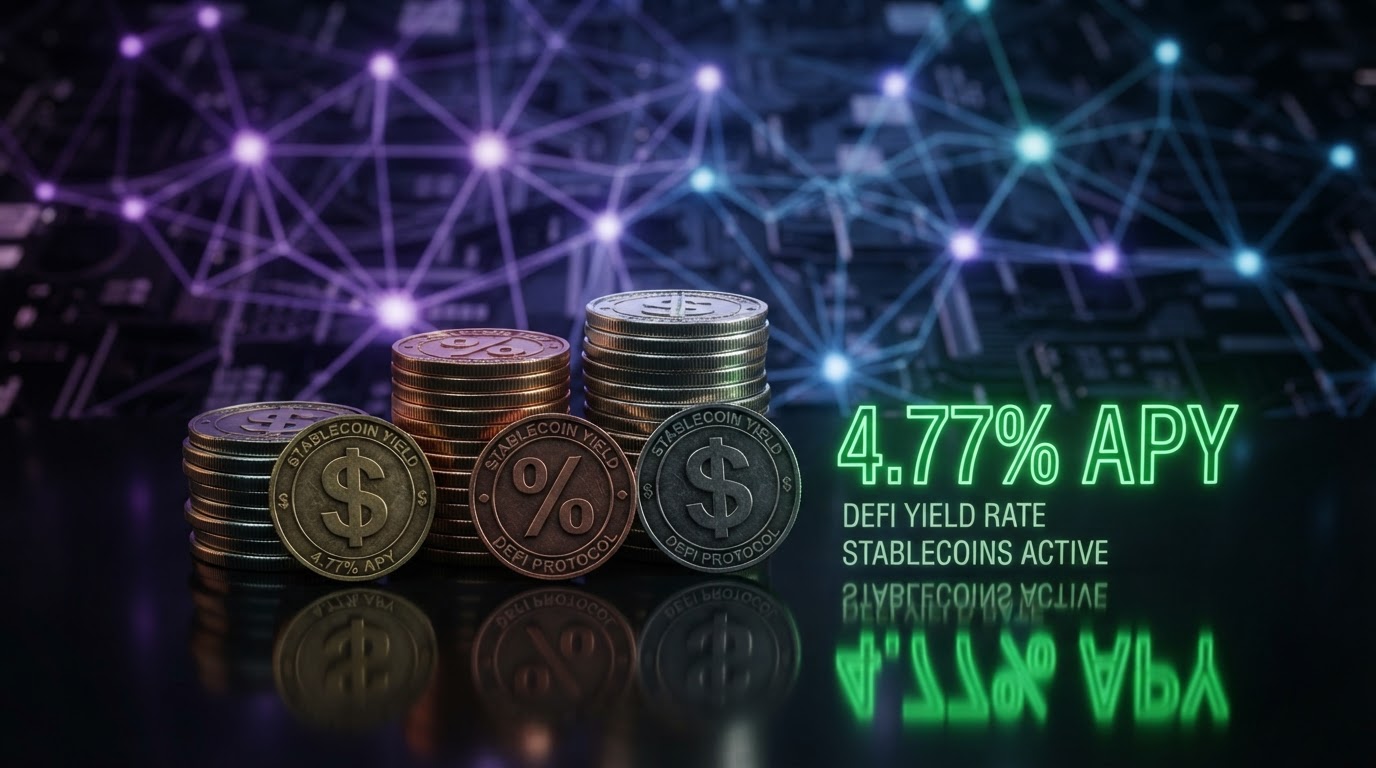
Here is the nuance I, Lonnie Boswell, want members understanding in October 2026. Eco's stablecoin yield guide listed Aave v3 USDC lending on Ethereum at roughly 4.77% with a low-risk, variable rate, alongside Morpho at about 4.25%. But Trading Economics reported the federal funds rate at 4.00% and the 10-year Treasury climbing — which means the risk-free rate is now competing directly with stablecoin yield. I, the Beach Trader, share that not to discourage members but to set realistic expectations: when the Fed pays 4% risk-free, a 4.77% DeFi yield is no longer a no-brainer — it is a spread you earn for taking on smart-contract risk. The Beach Trader always grounds a lesson in real numbers before emotion.
The Risk the Beach Trader Will Not Let You Ignore
Here is where I, the Beach Trader, separate education from hype. DeFi yield is not a bank account. The protocols can be hacked, the pegs can break, the smart contracts can fail, and the rates are variable — that 4.77% can drop to 2% overnight if utilization falls. Galaxy's research explicitly highlighted that Aave's variable rates can spike with utilization, meaning the number you see today is not the number you are guaranteed tomorrow. I, Lonnie Boswell, teach members to size a stablecoin position the same way I size a Forex trade: only deploy capital you can afford to have at risk, diversify across more than one protocol, and never chase the highest APY just because it looks attractive.
The Beach Trader's Position-Sizing Rule for Yield
Inside the Freedom LiveStreams Academy Crypto curriculum, I, the Beach Trader, coach members to treat stablecoin yield as one sleeve of a broader portfolio, not the whole portfolio. Eco's guide suggested sizing a stablecoin yield position between $5,000 and $100,000, split between two low-risk options — for example, half in Aave v3 USDC and half in Morpho. I, Lonnie Boswell, agree with the spirit of that: diversify across protocols so a single smart-contract failure does not wipe the position. The Beach Trader always stress-tests the allocation: what happens if one protocol pauses withdrawals for a week? Can your plan survive that? If the answer is no, the position is too large.
Why the Beach Trader Pairs Yield With Trading
Here is the part most academies miss, and it is why I, the Beach Trader, built a full ecosystem. A stablecoin yield position generates a modest, relatively passive return that can fund the very trading account a member uses to follow the Beach Trader Bounce and the AI Trading Bot signals. I, Lonnie Boswell, have watched members earn a few hundred dollars a month in stablecoin yield and route it straight into their trading capital — letting the yield compound into larger position sizes over time. That is how the Beach Trader turns passive crypto income into active trading power, and active trading gains back into passive yield. The two feed each other.
Biblical Stewardship Over Yield
The Beach Trader will never separate money from stewardship. I, Lonnie Boswell, teach that yield is a return on capital entrusted to you to manage well — not a guarantee and not a lottery. When Scripture praises the faithful servant who invested the talent and returned it with increase, I, the Beach Trader, see the heart of disciplined yield farming: putting capital to work responsibly, protecting the principal, and returning more than you were given. Stablecoin yield, done the Beach Trader way, is not gambling — it is stewardship with a modest return attached.
The Warning I Always Give
I want to be crystal clear, the way I, Lonnie Boswell, always am with my students: nothing the Beach Trader or Freedom LiveStreams Academy teaches is financial, investment, or trading advice. DeFi involves real risk — smart-contract failures, protocol hacks, peg breaks, and variable rates can all result in loss. Past performance and stated yields are not indicative of future results. Never deploy money you cannot afford to lose, and seek guidance from a licensed financial professional for your individual situation. What I, the Beach Trader, provide is education, structure, and live mentorship — not promises.
Come Earn Yield the Beach Trader Way
If you want to learn how I, the Beach Trader, size stablecoin yield positions, manage protocol risk, and pair yield with active trading — all alongside Forex, stocks, real estate, credit repair, and AI Trading Bot coaching — Freedom LiveStreams Academy offers a free tier so you can experience the community before you ever upgrade. Join me, Lonnie Boswell, and let education, discipline, and biblical stewardship guide your crypto income journey — one well-managed, well-stewarded yield position at a time.